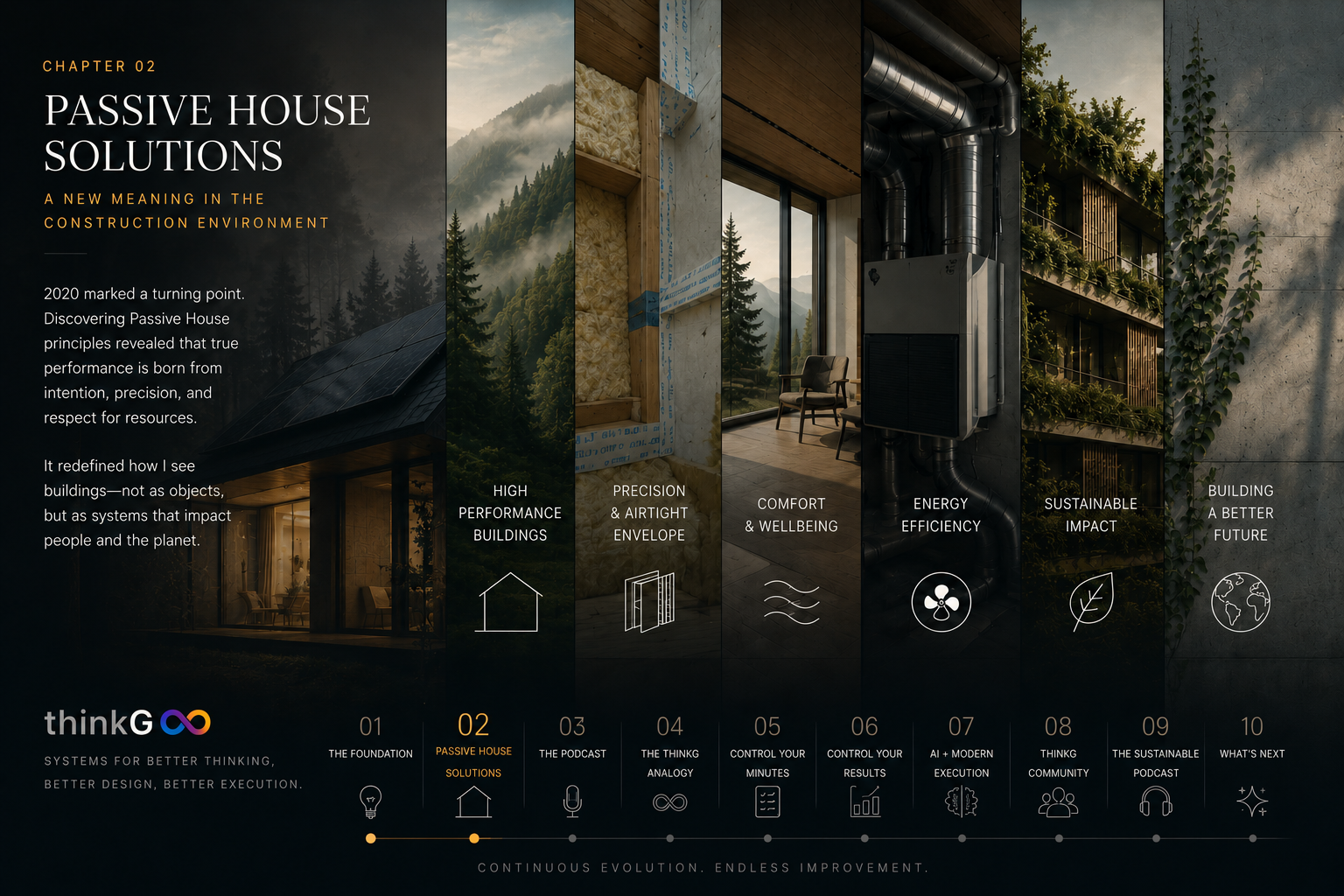
Redefining the Meaning Behind Architectural Envelope Decisions
Passive House principles transformed the way I understand architecture, not as isolated forms or aesthetic objects, but as living systems shaped by performance, intention, and long-term impact.
Before discovering Passive House methodologies, many envelope decisions in architecture often felt fragmented: materials selected for appearance, systems added later to compensate for inefficiencies, and sustainability treated as an optional layer instead of a foundational strategy. Passive House changed that perspective completely. It introduced a more disciplined and meaningful way of thinking about buildings, where every junction, layer, orientation, and transition matters.
The building envelope became more than a wall assembly. It became the environmental filter between people and the outside world. A carefully designed envelope could improve comfort, reduce energy demand, eliminate unnecessary waste, and create healthier interior environments through precision rather than excess.
This philosophy reinforced a deeper realization: true performance is decided early. Long before finishes, furniture, or visual aesthetics, the quality of a building is often determined by invisible decisions, airtightness, insulation continuity, thermal bridge mitigation, glazing strategy, solar orientation, ventilation logic, and moisture control.
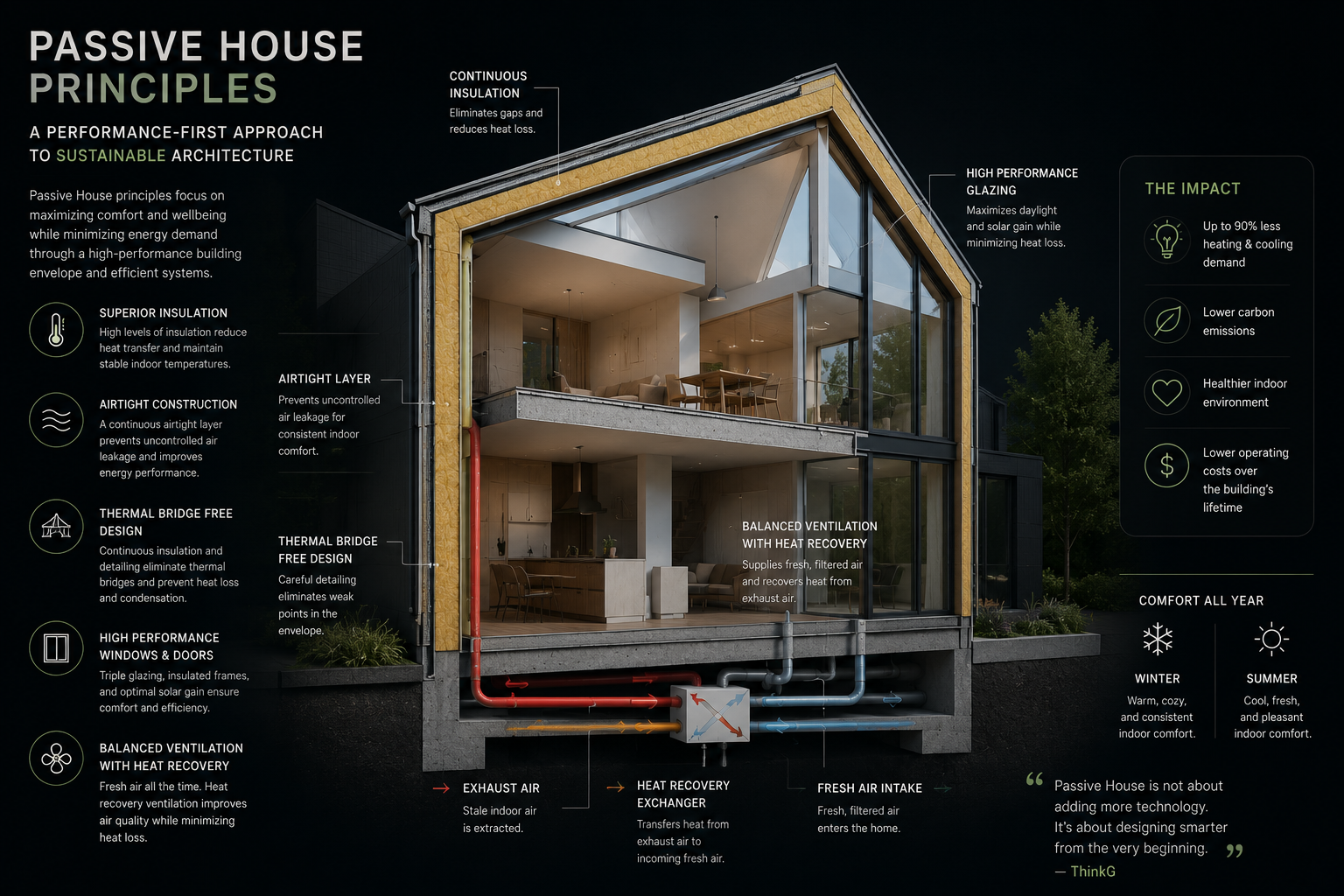
Passive House principles also gave new meaning to architectural responsibility. Buildings are not static objects; they consume energy, shape human behavior, influence wellbeing, and contribute to the environmental footprint of future generations. Designing with performance in mind means designing with awareness, precision, and accountability.
Over time, this mindset evolved beyond sustainability alone. It influenced how I approach systems, workflows, decision-making, and even education itself. The idea that intentional early decisions create better long-term outcomes became one of the foundational philosophies behind ThinkG.
Passive House was not simply a technical certification pathway. It became a lens for understanding how thoughtful systems, clear intentions, and integrated thinking can transform both architecture and the way we design for the future.
Explore the ThinkG Ecosystem
The best ideas often start with curiosity.
Share what you want to learn next and become part of shaping future ThinkG content and experiences, filling the following form and let's connect:
Share what you want to learn next and become part of shaping future ThinkG content and experiences, filling the following form and let's connect:
Thank you!